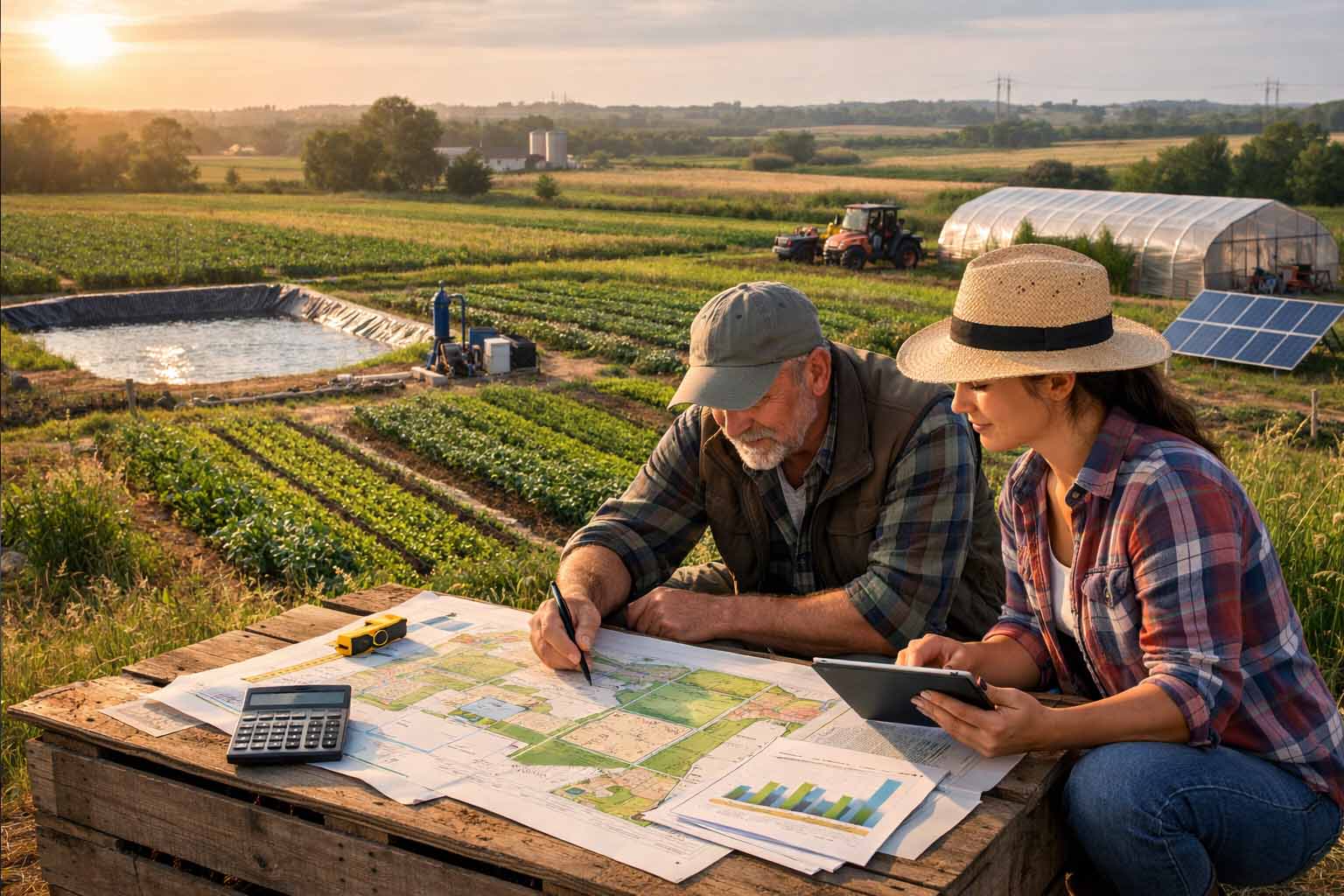
Before a seed goes into the ground or a structure takes shape, farmers spend time thinking through what they truly have to work with. Space, water, and power shape nearly every farming decision, yet they are often treated as assumptions rather than limits. Careful estimation helps farmers avoid waste, reduce risk, and respect the land they depend on.
This matters even more for small farms and community plots. A field that looks large may be hard to access. A wet area may still lack usable water during dry weeks. Power that seems optional can quietly become a daily need. Estimation does not remove uncertainty, but it brings clarity before effort and money are committed.
In many regions, farms also sit within shared landscapes. Comparing land areas across districts or traditional boundaries often requires converting units. Tools like a square kilometers to square miles calculator help farmers and planners speak the same language when discussing land scale across regions or cooperative projects.
Quick Summary
This article explains how farmers think through three practical questions before planting or building. It looks at how land scale affects access and labor, why water must be planned even in wet climates, and how energy needs show up in daily farm work. Each section connects practical measurement with long-term stewardship.
Understanding land scale in real terms
Land size figures often sound clear on paper. In practice, they rarely tell the full story. A five-acre plot on a map may include steep edges, poor access roads, or shared boundaries that limit use. Farmers learn quickly that usable space matters more than total area.
Communal land adds another layer. Some plots pass through families over generations. Others sit within community-managed zones. Boundaries may follow natural features rather than straight lines. These realities shape where tools can move, where crops can grow, and how labor flows through the land.
Pressure from nearby development also affects how land is used. Roads, housing, and utilities reshape farming choices over time. Discussions around agricultural land use often center on these trade-offs, especially where farms and cities grow side by side. Understanding scale helps farmers defend workable space and plan within real limits.
Converting fields into workable measurements
Many farmers inherit land described in local or traditional units. Others lease plots measured decades ago. To plan planting density or seasonal work, they often need to translate those descriptions into standard measures they can apply in the field.
Land size affects timing. A small plot warms faster in spring. A larger field takes longer to prepare and plant. These differences shape crop timing by climate, especially where seasons shift quickly. Knowing how much ground must be worked allows farmers to match labor and weather windows more closely.
Later in planning, conversion becomes more technical. Row spacing, irrigation layout, and input planning all rely on consistent units. Using an acres to square meters converter allows farmers to move from rough descriptions to precise layouts without guesswork. That clarity reduces overplanting and uneven growth.
Estimating water needs beyond rainfall
Rainfall shapes farming, but it cannot be the only plan. Even regions known for steady rain face dry stretches, uneven storms, or runoff that never reaches crops. Farmers who treat water as a planned resource stay more resilient across seasons.
Storage plays a key role. Tanks, ponds, and lined basins act as buffers during dry weeks. Estimating how much water they hold allows farmers to match storage with crop demand. Tools like a tank volume calculator help translate physical dimensions into usable capacity, making planning more grounded.
This planning matters even where water seems abundant. Without storage, heavy rain can leave fields saturated one week and dry the next. With storage, farmers smooth those swings and protect crops during stress periods.
Linking water planning to soil health
Water volume and soil structure work together. Too much water compacts soil and drives nutrients away. Too little leaves roots shallow and stressed. Farmers pay close attention to how water moves through their soil over time.
Healthy soil holds moisture longer and releases it more evenly. Organic matter, living roots, and careful ground cover all play a role. Practices that support soil health improvement often begin with water planning rather than inputs alone.
Traditional farming systems understood this balance well. Terraces, mulching, and rotation reduced erosion and kept moisture where crops could reach it. Modern estimation tools support those same goals by helping farmers match water supply with soil capacity.
Estimating power needs for small farms
Power use on farms extends far beyond large machines. Pumps move water uphill. Lights extend work hours during short days. Cooling keeps harvested crops fresh. These needs add up quietly.
Small farms often add power systems piece by piece. Without estimation, costs rise and reliability suffers. Farmers who plan energy use early can choose systems that fit their scale and daily rhythm.
On-site options now play a larger role. Solar panels power pumps and sheds in many regions. A solar calculator helps farmers estimate output based on location and system size. That estimate supports realistic planning rather than optimistic guesses.
Energy use and long-term farm stability
Energy choices affect farm budgets year after year. Reliable power reduces losses and stress. Efficient systems lower operating costs and maintenance demands.
Energy also ties directly to environmental impact. Agriculture uses power for water movement, storage, and processing. Organizations such as the Food and Agriculture Organization provide data on agricultural energy use, helping farmers understand how their choices fit into broader patterns.
By estimating power needs early, farmers avoid overbuilding and reduce dependence on unstable supplies. Energy planning becomes part of resilience rather than a later fix.
Planning before growth
Estimating space, water, and power does not aim for perfect prediction. It builds awareness. Farmers who understand their limits make steadier choices and adjust with confidence as conditions change.
These estimates connect daily work with long-term care. They protect land, support crops, and respect shared resources. Thoughtful planning keeps farming grounded in reality while leaving room for growth rooted in stewardship.